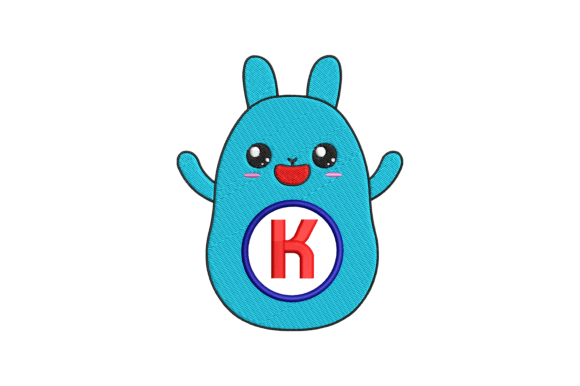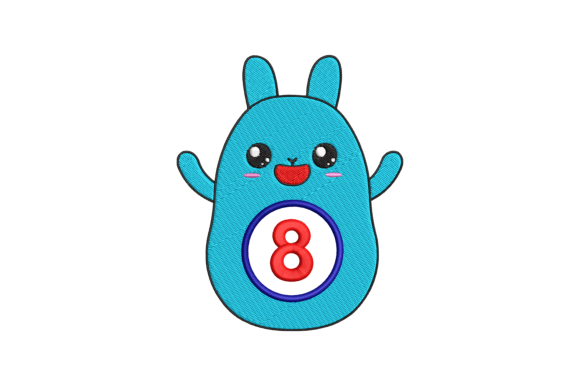
Cute Rabbit Number 8
First Impression: Soft Charm Meets Back-to-School Whimsy
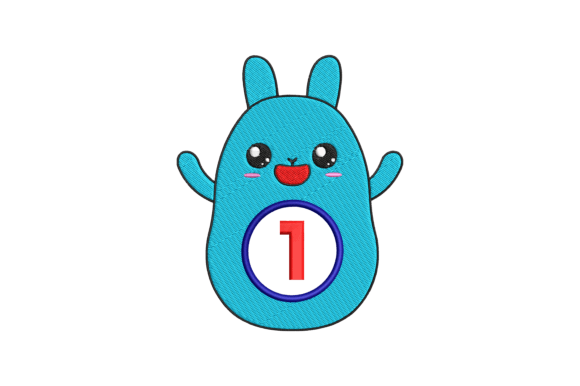
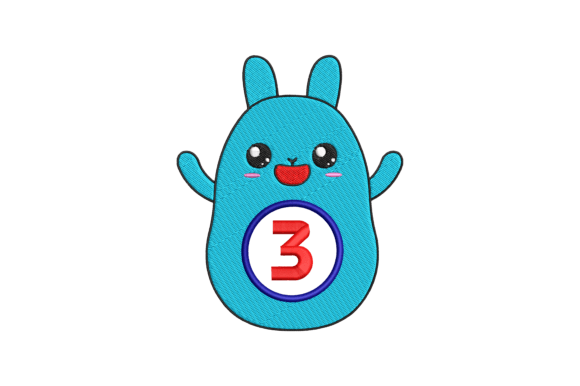
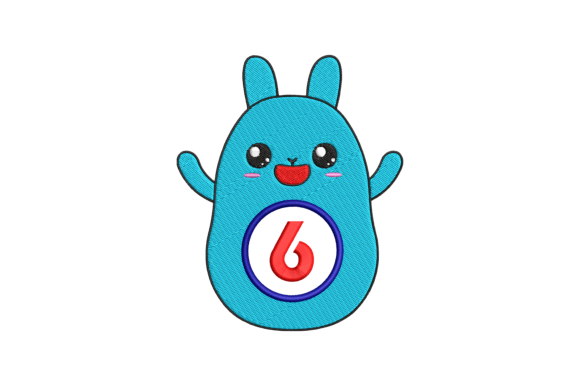
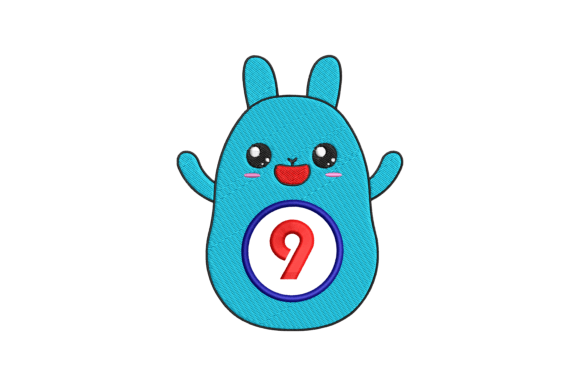
As an embroidery designer who’s prepped over 200 craft fair booths, my first thought on Cute Rabbit Number 8 is this: it lands squarely in the “delightfully approachable” zone. It’s not bold or graphic—it’s soft, friendly, and quietly confident. The pairing of animal motif with numeral suggests playful learning energy—perfect for Back To School without shouting “pencils and notebooks.” Think kindergarten teacher gifts, student welcome kits, or gentle encouragement for new routines. It reads as handmade, not mass-produced; charming, not cutesy-overload. That subtle elegance mentioned in the description? Yes—it’s there, especially when stitched cleanly on natural linen or medium-weight cotton.
Where Cute Rabbit Number 8 Shines on Craft Fair Products
This design thrives where personality meets utility. On a tote bag design, placed front-and-center above the seam (not too low), it becomes an instant conversation starter—soft enough for moms, whimsical enough for teens, refined enough for boutique shoppers. As apron embroidery, positioned just below the pocket or centered on the bib, it adds warmth without overwhelming the wearer’s movement. For tea towel embroidery, it works best on the lower corner or hem—its rounded shape echoes classic kitchen textile motifs while avoiding visual competition with stripes or checks.
Embroidered patches are where Cute Rabbit Number 8 truly earns its keep. Its compact scale, clear silhouette, and balanced negative space make it ideal for iron-on or sew-on patches sold individually or bundled with back-to-school kits. On caps, use caution: the rabbit’s ears and number curves may distort on curved surfaces unless digitized with proper underlay and reduced density. For small pouches and pillow covers, it anchors beautifully at the center or lower third—never cramped, always legible.
What Makes It Sell—And What Requires Extra Care
At a glance, customers get it. No decoding needed. That’s gold for craft fairs, where attention spans are measured in seconds. It works equally well as a small accent (e.g., corner of a market bag) or a large focal design (scaled to 4–5 inches wide on a pillow cover). Photographs exceptionally well for Etsy seller listings—especially against neutral backdrops—and pairs effortlessly with printable mockups that highlight handmade quality.
But here’s the real talk: Cute Rabbit Number 8 isn’t “set and forget.” Its charm depends on execution. Watch for stitch density in the rabbit’s face or number curves—over-stuffing creates stiffness and hides detail. Tiny eyes or fine whiskers? They’ll vanish on textured towels or thick denim unless your embroidery file includes clean satin columns and minimal fill. Dark fabric demands high-contrast thread colors—test ivory on charcoal, not beige. And if you’re stitching on caps or curved items, confirm your hoop size accommodates smooth hooping without puckering.
Design Notes Every Embroidery Business Owner Should Follow
- Always test the design on scrap fabric—same weight and weave as your final product.
- Check thread contrast before batching: what reads softly in daylight may disappear under booth lighting.
- Review spacing between rabbit and number—tight gaps can merge in dense stitching; open spacing preserves clarity.
- Confirm stabilizer choice: lightweight cutaway for knits, tear-away for stable wovens, fusible for tea towels.
- Create at least one real mockup—not digital. Hold it. Drape it. See how light hits the stitches.
- Compare fabric colors side-by-side: oatmeal linen vs. natural cotton behave differently under thread sheen.
- Verify commercial licensing status—Cute Rabbit Number 8 is a digital embroidery file; selling finished products requires explicit rights.
How It Strengthens Your Booth & Brand
In a sea of rustic quotes and generic florals, Cute Rabbit Number 8 stands out by being both specific and warm. It signals intentionality—not just “I embroider,” but “I curate meaningful details.” That elevates perceived value: shoppers pay more for pieces that feel personal, not generic. On your display table, pair it with coordinating solids (muted sage, warm oat, soft clay) and let the design breathe—no cluttered signage needed. Its consistency across tote bags, patches, and aprons builds brand consistency without monotony.
For small shop product lines, it’s repeatable without fatigue. You can offer it in three thread palettes (earth tones, pastels, monochrome) and still feel cohesive. As a commercial embroidery offering, it scales well—from single custom orders to batch production—provided stitch density and underlay are optimized. And yes, it fits the Back To School season without feeling dated by October. Its quiet confidence makes it timeless enough for year-round gifting, too.
Final Designer Verdict: A Quiet Standout With Real Selling Power
Cute Rabbit Number 8 isn’t flashy—but it doesn’t need to be. In the handmade market, authenticity and clarity win. This machine embroidery design delivers both: instantly readable, deeply adaptable, and rich with unspoken warmth. It transforms everyday items into handmade product treasures—whether stitched onto a child’s lunchbox pouch or framed as a tiny wall hanging. For Etsy sellers, craft fair vendors, and boutique makers alike, it’s a reliable anchor piece: easy to photograph, simple to explain, and satisfying to produce—when treated with thoughtful attention to fabric, thread, and technique. Just remember: its elegance lives in the execution. Test. Refine. Repeat. Then watch customers reach for it—again and again.