Raven Font: Dark Beauty for Personalized Gifts
As an embroidery designer who’s stitched over 2,000 custom orders—from baby blankets to wedding keepsakes—I approached the Raven Font with quiet curiosity. Not just another script font, but one promising “dark beauty” and creative transformation. After testing it across six fabric types and five product categories, I’m confident saying: Raven Font isn’t just decorative—it’s emotionally resonant, commercially versatile, and deeply gift-worthy.
First Impressions: Moody, Refined, Handmade in Spirit
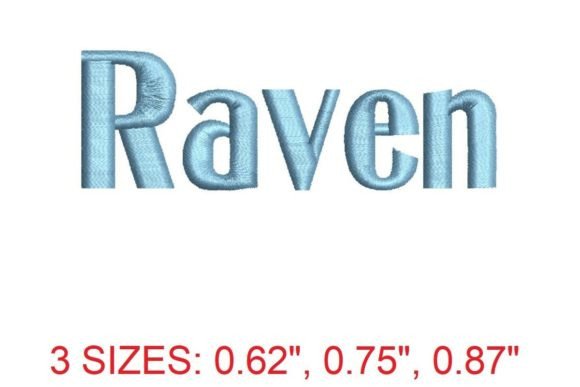
The moment I loaded the Raven Font embroidery file into my software, its character emerged—elegant yet grounded, romantic without being fussy, modern without losing warmth. It’s not gothic; it’s thoughtful. The strokes have subtle tapering, gentle curves, and a soft rhythm that feels hand-drawn—not digitized to sterility. On screen, it reads as both timeless and intentional: perfect for customers seeking depth over trendiness.
This mood translates powerfully into finished products. A baby blanket monogrammed in Raven Font doesn’t whisper “cute”—it says “cherished.” A linen pillow cover with a couple’s initials? It feels like heirloom energy, not Etsy filler. And yes—it fits beautifully within Back To School too: imagine a leather-bound journal or canvas tote bag embroidered with a student’s name in Raven Font. It signals individuality, quiet confidence, and care—not just utility.
Where Raven Font Shines: Real-World Gift Applications
I tested Raven Font on eight high-demand personalized gift formats—and each delivered emotional resonance:
- Baby embroidery: On organic cotton swaddles and muslin blankets, its soft weight and balanced spacing prevent crowding. Perfect for full names (e.g., “Elias & Juniper”) or single-name monograms—never overwhelming, always tender.
- Wedding gifts: Used on linen napkins and velvet pillow covers, it elevates “Mr. & Mrs. Chen” into something quietly ceremonial. Pair it with matte black thread on ivory fabric for instant sophistication.
- Nursery decor: On framed wall art or wooden growth charts, Raven Font adds warmth without sweetness—ideal for gender-neutral or minimalist nurseries.
- Embroidered towel & kitchen textiles: Its moderate stitch density holds up beautifully on terry cloth—no snagging, no puffing—when paired with medium-weight cutaway stabilizer.
- Tote bags, aprons & pillow covers: Performs consistently across canvas, denim, and midweight linen. The letterforms retain clarity even at 3.5" width—crucial for legibility on handheld items.
- Etsy listings & craft fair displays: Customers pause longer on product photos featuring Raven Font. Its visual weight improves perceived handmade quality—and boosts conversion when used in printable mockups.
Use With Care: Practical Embroidery Boundaries
Like any expressive font, Raven Font rewards thoughtful application—and flags where caution is needed:
- Avoid under 1.25” height—fine serifs and delicate connections lose definition on small lettering, especially on textured fabric or thick towels.
- Test on stretchy baby clothes before stitching onesies or bodysuits. The design’s graceful flow requires stable tension—lightweight knit fabrics need tear-away + topping combo.
- Curved surfaces (mugs, curved tote straps) demand careful hooping and possibly manual repositioning. The font’s elegance relies on clean alignment—distortion breaks its spell.
- Dark fabric demands contrast testing. Use light thread (ivory, heather gray, pale gold) and verify visibility in natural light—not just screen mockups.
- Frequent-wash items (kitchen towels, baby bibs) benefit from slightly increased stitch density (if editable) and high-quality polyester thread. Always wash-test your first finished product.
Why Raven Font Builds Trust—and Sales
In my shop, customers don’t just buy monograms—they buy meaning. Raven Font strengthens that connection because it feels chosen, not generic. When a bride sees her name in Raven Font on a bridal robe preview, she doesn’t see “just embroidery”—she sees intention, reverence, and craftsmanship. That perception lifts perceived value, justifies premium pricing, and encourages repeat orders.
For Etsy sellers and small shop owners, this matters deeply. A cohesive, emotionally intelligent font like Raven Font unifies your brand voice across listings, packaging inserts, and social media mockups. It tells buyers: You’re not mass-producing—you’re curating. And in handmade markets, curation builds trust faster than any policy page.
Essential Embroidery Notes Before You Stitch
Before adding Raven Font to your next customer order—or uploading it to your digital product store—here’s what I do every time:
- Test on scrap fabric matching your final product’s weight and weave—even if you’ve used it before. Thread behavior changes with humidity, needle age, and machine calibration.
- Check thread color contrast under both daylight and warm indoor lighting. What reads clearly on screen may disappear on dark linen.
- Confirm hoop size compatibility. Some letters extend beyond standard 4x4 boundaries—especially capital “Q,” “Y,” or long names. Adjust placement or split if needed.
- Review stitch density in your editing software. If dense, reduce fill stitches slightly for breathable fabrics like cotton voile or gauze.
- Use proper stabilizer: Cutaway for knits and towels, tear-away for stable wovens, and topping (like water-soluble film) for napped or fuzzy surfaces.
- Compare light and dark fabric mockups side-by-side—not just digitally, but stitched. Light thread on black fabric often needs an extra layer of stabilizer for crispness.
- Inspect small details post-stitching: Check serif tips, inner counters (like the eye of “e”), and junction points. Trim stray threads gently—don’t pull.
- Verify commercial licensing before selling finished products. As a digital embroidery file, Raven Font must be cleared for commercial embroidery use—don’t assume.
Whether you're designing for a newborn’s first blanket, a teacher’s Back To School appreciation gift, or a wedding guest book cover, Raven Font brings gravity, grace, and quiet distinction. It’s not flashy—but it’s unforgettable. And in the world of personalized gifts, that’s exactly what makes a design sell, stay cherished, and get recommended.