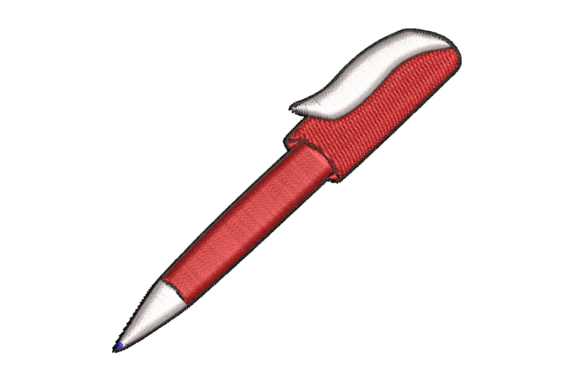
Ballpoint Pen Embroidery Design
A Seasonal Designer’s First Look: Playful, Precise, and Perfectly Timed
As an embroidery designer who’s built six holiday collections and launched over 200 seasonal embroidery files, my first impression of Ballpoint Pen is immediate and confident: it’s a cheerful, clean, and quietly clever design that lands right at the sweet spot between Back To School practicality and holiday charm. It doesn’t shout “festive”—instead, it whispers warmth, nostalgia, and thoughtful craftsmanship. The line work is crisp but friendly; the proportions are balanced for both small accents and bold centerpieces; and the overall tone feels modern-cute—neither overly childish nor sterile. It reads as handmade gift–ready from the moment you open the embroidery file.
Where Ballpoint Pen Shines in Real Holiday Product Lines
This machine embroidery design isn’t just decorative—it’s *functional storytelling*. On sweatshirt embroidery, it adds personality without overwhelming—ideal for family matching sets (think coordinating crewnecks for teachers, students, and grandparents). As a tote bag design, it transforms everyday carry into a conversation starter at craft fairs or school drop-offs. For kitchen towel embroidery, it brings lighthearted sophistication to holiday hostess gifts—especially when paired with linen or cotton towels in sage, cream, or terracotta.
On pillow covers and embroidered patches, Ballpoint Pen becomes a tactile signature—soft enough for baby items (like onesies or burp cloths), sturdy enough for aprons and table linens. And yes—it works beautifully on ornaments and gift-ready products: stitch it onto felt circles, mount it on wooden tags, or pair it with ribbon-wrapped jars for teacher appreciation bundles. Etsy sellers will find it performs exceptionally well in printable mockups and social media previews—its clean silhouette renders crisply even at thumbnail size, boosting visual recognition during high-volume holiday browsing.
Design Nuances That Boost Seasonal Appeal & Buyer Trust
Holiday shoppers don’t just buy designs—they buy *feeling*. Ballpoint Pen delivers emotional resonance through subtlety: the slight curve of the pen barrel suggests motion and intention; the minimal shading implies depth without heaviness; and its scale invites personalization (a monogram beside it? A tiny apple or pencil tucked in the corner?). That level of considered detail builds customer trust—especially for small shop products where buyers expect authenticity and care.
It also strengthens brand consistency across seasonal drops. Whether you’re launching a “Back To School & Beyond” collection or a “Cozy Classroom” holiday line, Ballpoint Pen acts as a unifying motif—elegant enough for premium packaging, approachable enough for playful gifting. Its versatility means fewer design swaps between product types, which streamlines mockup creation, inventory planning, and promotional graphics. In short: it increases perceived product value while reducing your creative overhead.
Smart Usage Notes for Real-World Embroidery Success
Before stitching your first holiday run, here’s what I test—and recommend you do too:
- Thread colors matter more than you think. Try matte pastels on light fabric for softness, and deep navy or charcoal on dark fabric for contrast. Avoid metallic thread unless you’ve tested tension on your specific machine—Ballpoint Pen’s fine lines can snag or distort.
- Stabilizer choice is non-negotiable. Use cutaway for stretchy garments (like ribbed knit sweatshirts) and tear-away for stable fabrics like cotton twill or linen. Skip fusible-only stabilizers for kitchen towels—the repeated washing demands structural integrity.
- Check stitch density early. If the embroidery file includes layered details (like subtle shadowing or cap accents), confirm density isn’t excessive—high stitch counts can stiffen delicate fabrics and reduce comfort in baby items or pillow covers.
- Hoop size affects placement strategy. For curved surfaces like caps or mugs, verify the design fits comfortably within your standard hoop. If not, consider splitting the design or using a smaller version for side-embroidered accents.
- Fabric texture changes everything. On thick terry cloth towels, use a water-soluble topper to prevent skipped stitches in the pen’s finer curves. On silky or slippery fabrics, add a light spray adhesive before hooping.
Where to Use Ballpoint Pen With Intention—And Where to Pause
This design excels on flat, stable surfaces: tote bags, pillow covers, aprons, and flat-panel ornaments. It’s ideal for medium-to-large placements—center chest, upper back, or lower corner of a kitchen towel. But proceed with extra caution on:
- Tiny hoop sizes (under 3” x 3”). Some versions may include fine lettering or tight loops—verify legibility at small scale before committing to keychains or mini patches.
- Dark fabric without underlay testing. Always run a test stitch on black or navy fabric to ensure coverage and avoid ghosting—especially if the design uses satin stitch fills.
- Items requiring frequent washing. Reinforce backings on baby onesies or dish towels, and avoid dense fill areas near seams where friction could cause wear.
- Curved or uneven surfaces. Caps, mugs, and rounded ornaments demand precise digitizing—don’t assume the default file adapts seamlessly without re-hooping or resizing.
Final Thoughts for the Seasonal Embroidery Seller
Ballpoint Pen isn’t just another holiday embroidery—it’s a strategic asset. It bridges the gap between academic utility and heartfelt gifting, making it equally effective for teacher appreciation, student motivation, and cozy home decor. As a digital embroidery file, it’s flexible enough for rapid prototyping and scalable enough for limited edition apparel drops. Just remember: always review the embroidery file for commercial licensing before selling finished product—especially for Etsy or wholesale channels. And never skip the test stitch. Your reputation as a thoughtful, reliable creator hinges on how well Ballpoint Pen performs—not just in the file, but on the fabric, in the hands of the person who unwraps it on Christmas morning or opens it on the first day of school.